Too often
Alerts that arrive too often
A single signal can trigger an alert, even when the wider context does not call for one.
Fleet Intelligence brings driver monitoring and advanced driver-assistance signals together so the vehicle can respond to the full situation, not separate alerts in isolation.
It is designed for vehicle-native sensors and compute, with the safety and cockpit experience shaped around the manufacturer’s platform.
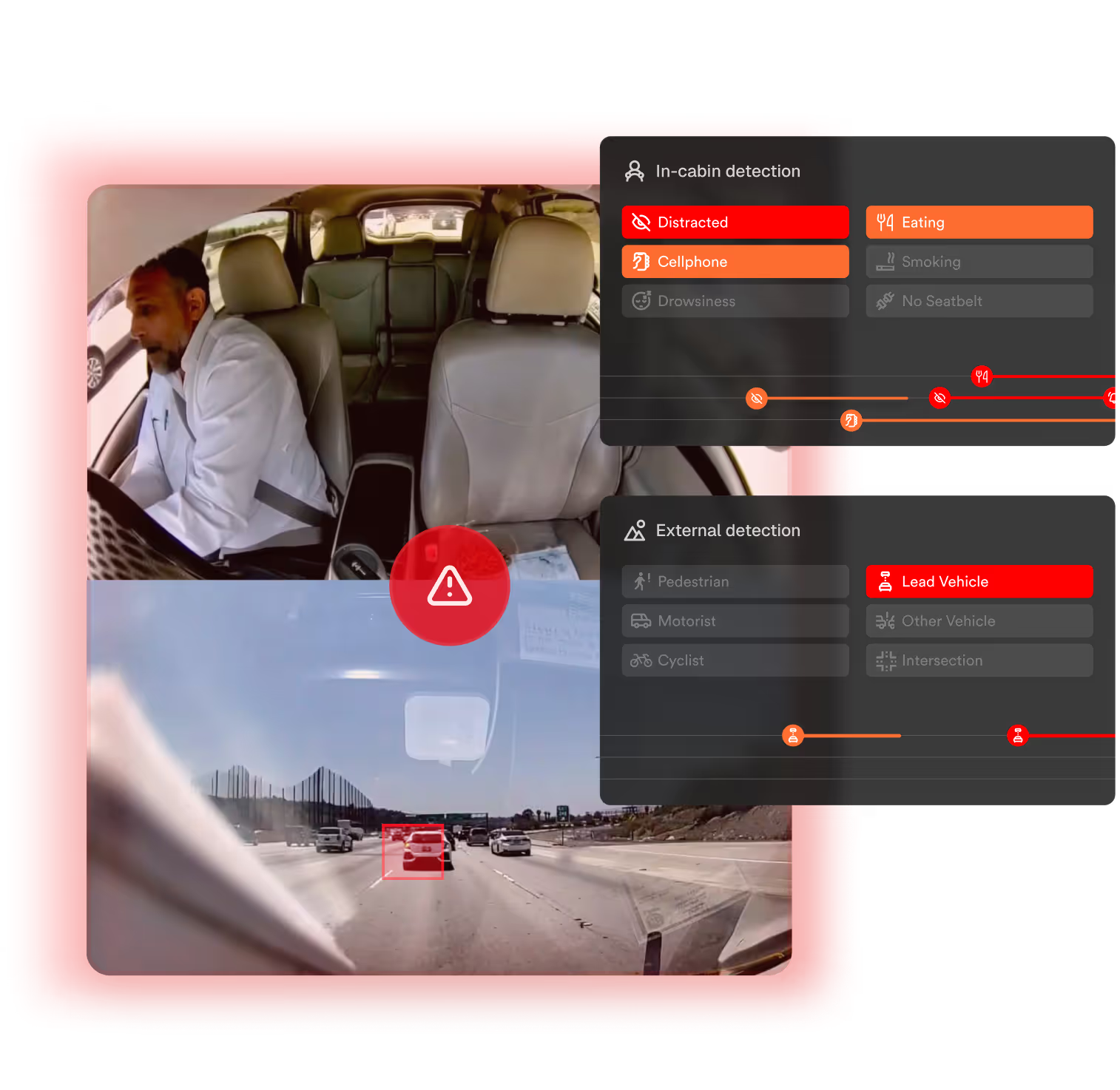
Driver monitoring cameras observe driving behavior. Advanced driver-assistance systems watch the road. When those signals are evaluated separately, the vehicle can miss how risk is building across both.
A single signal can trigger an alert, even when the wider context does not call for one.
Threshold-based collision warnings may respond only after the available reaction window has narrowed.
When alerts feel late, frequent, or irrelevant, drivers are more likely to ignore the feature that is meant to help them.
With Empiric Earth safety models embedded into the vehicle, all risks are evaluated together in real time to reduce collision risk.
Brings together driver state, road conditions, surrounding traffic, and vehicle dynamics.
Uses the combined context to determine when risk is meaningful enough to warrant an alert.
Delivers the alert through an OEM-designed experience while the driver may still be able to change the outcome.

Fleet Intelligence is designed to run with the cameras, sensors, and compute available in the vehicle.
The safety capability can be integrated into the vehicle rather than added later as a separate windshield device.
Manufacturers can shape how safety information appears within the vehicle’s interface and connected-service strategy.
Empiric Earth’s Predictive Fusion capabilities and SAFER model have been independently tested by the Virginia Tech Transportation Institute (VTTI) and verified by customer success stories.
Understand how Empiric Earth's safety capabilities can fit your vehicle, interface, and validation requirements.
We reply within one business day.