Every major advance in vehicle safety for a hundred years has been about what happens during impact. The seconds before it were treated as unreachable. That is no longer the case, and the industry has not caught up with what that means.
The history of automotive safety is a history of managing energy. The crumple zone absorbs it. The seatbelt distributes it. The airbag decelerates a body more slowly than the dashboard would. Each of these is a magnificent piece of engineering, and each accepts the collision as a given and works on the consequences.
That acceptance was rational. For most of the century there was no instrument that could reliably see a collision developing and no channel to do anything about it in time. Regulation, testing regimes, insurance models, and engineering culture all organized around the moment of impact because it was the only moment that could be influenced.
The window was always there
What has changed is not the physics. It is the ability to observe. A collision does not begin at impact; it begins several seconds earlier, when a set of conditions align and nobody has yet noticed. Human drivers notice some of these and miss others. The ones they miss are where the losses concentrate.
Conventional forward collision warning operates in that window, but narrowly. It typically fires when a closing rate crosses a threshold, which is late, and it is looking at one signal.
Where conventional systems fail
The common case is largely solved. Automatic emergency braking handles a lead vehicle decelerating in-lane, in daylight, on a marked road, and it handles it well. That is not where the losses are.
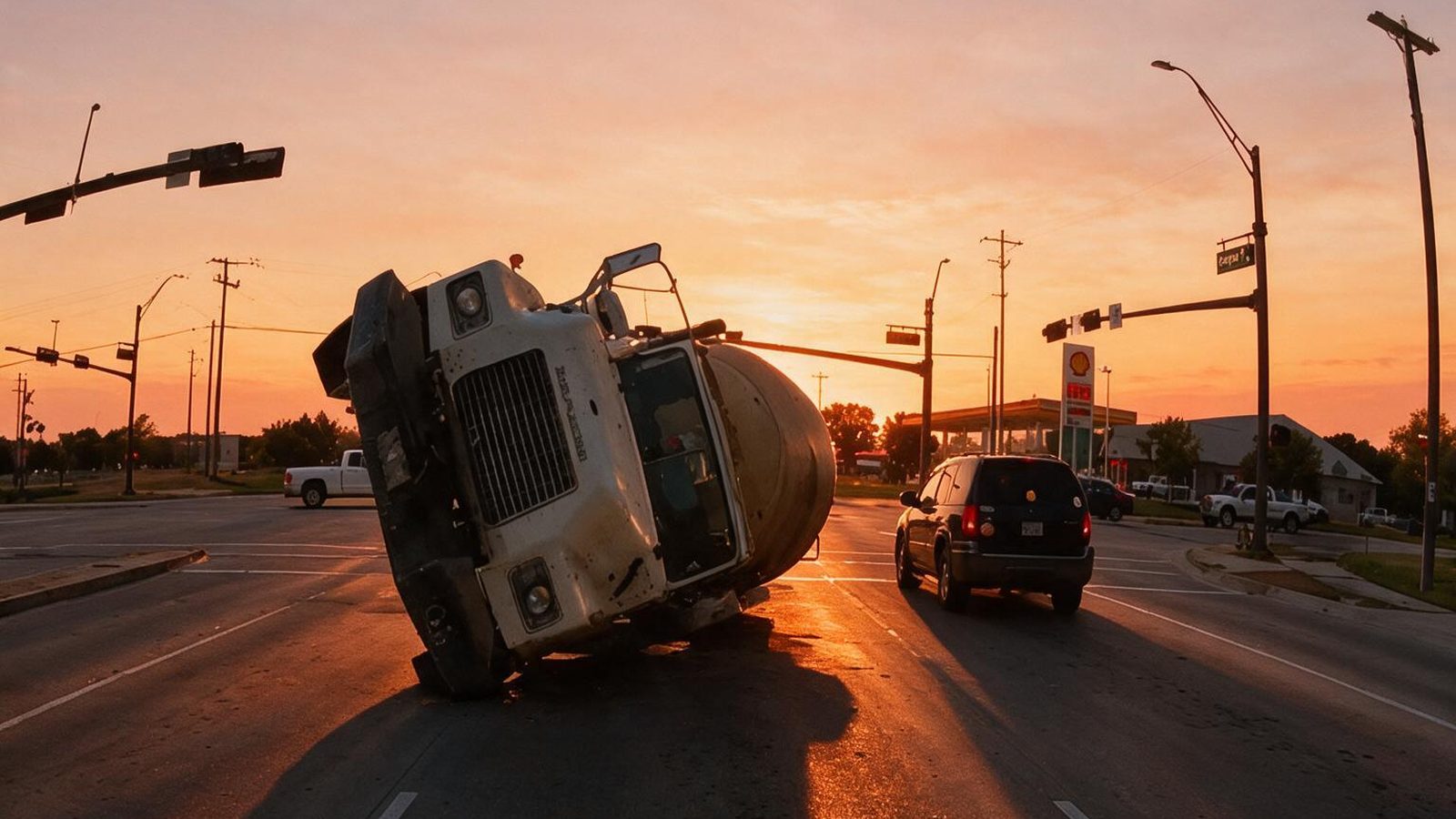
The losses are in the cases the specification did not anticipate. A vehicle stopped at an angle across two lanes. A person low to the ground. A cyclist emerging from between parked cars into a gap the system read as empty road. Conventional driver assistance degrades sharply in exactly the situations that produce the most serious outcomes, and it degrades quietly, because nothing in the system reports that it is now operating outside what it was built for.
A system trained on the common case tells you it is working right up until the moment it is not.
Alert time matters, and it matters a lot
One way to alert earlier is fused prediction: road, vehicle and driver state evaluated together rather than separately. An independent study by the Virginia Tech Transportation Institute found that this produced alerts arriving three to five seconds earlier than conventional systems, at 99% accuracy, roughly doubling the time a driver has to respond.
Three to five seconds does not sound like much. But at 60mph it is the difference between a collision and a story about a near miss.
Two records, one clock
The reason our alerts arrive earlier is not a better camera. It is two synchronized cameras, one facing the road and one facing the driver, read against a single timeline.
Most systems in this category watch one side of the windshield. Forward-facing systems see the road and infer the driver from how the vehicle behaves. Driver-monitoring systems watch the person and know nothing about what the person is looking at. Each produces a partial account, and the partial accounts are not comparable, because they were never timestamped against each other.
When both cameras are synchronized, you can ask the question neither one could answer alone: at the moment the hazard became visible, where was the driver's attention, and how long did it take them to respond?
That number is the useful one. It is not a measure of the road and it is not a measure of the driver. It is the gap between the two, and the gap is where the loss happens.
It is also what makes a severity judgment possible. A pedestrian stepping toward a curb is not an emergency if the driver is already looking at them. The same pedestrian, with the driver's attention elsewhere, is a different event entirely, and only a system holding both records can tell those two apart.
The second problem: nobody listens to a system that cries wolf
Earlier detection creates a new failure mode, and it is the one that kills most deployments.
If you look further ahead, you see more potential conflicts, and most of them resolve themselves. A pedestrian steps toward a curb while you are already braking for a red light. A cyclist appears in a protected lane separated from traffic. A vehicle drifts in an adjacent lane and corrects.
A system that alerts on all of these is technically detecting correctly and practically useless, because within two weeks the driver has learned to ignore it. Alert fatigue is not a user-experience problem. It is a safety failure with a user-experience explanation.
Which means the interesting engineering question is not whether you can see it earlier. It is whether you can see it earlier and stay quiet until an alert is actually needed. Doing both requires judging severity rather than frequency: knowing, from accumulated real-world experience, which developing situations actually end badly.
That judgment cannot be derived from first principles. It has to be learned from a very large number of real situations where the outcome is known.
What this changes downstream
If accident prevention becomes reliable, several things that currently look fixed start to move.
Insurance shifts from pricing to preventing. A book of business where collisions fall by half is a different financial instrument, and loss prevention becomes the product rather than a discount lever.
Liability moves. When a preventable collision could in fact have been prevented by a system the operator chose not to deploy, the question about who is responsible changes shape.
Regulation follows capability. Requirements written around impact survival do not yet know what to do with a system that acts before impact. They will.
The measurement problem gets harder. You can count crashes. Counting crashes that did not happen requires a comparator, a baseline period and a stated method, which is why every number we publish carries all three.
The part we are least sure about
Prevention is easier to demonstrate in a fleet than in a population. A fleet has a baseline, a defined vehicle set, a comparable period and somebody accountable for the result. Fleets running our system have reported over 60% reduction in at-fault collisions and an even larger reduction in total collisions.
Whether similar reductions would hold at national scale, across mixed vehicles, mixed drivers and mixed roads, is genuinely unresolved. We think they largely would. We do not yet have the evidence to assert it, so we are not going to.